
MODULE 3
Your Body Speaks
Context rules Content
Objectives
The Power of Body Language
Your use of body language either enhances and supports your message or detracts from it. If your body language is distracting to your audience or contradicting your intended message it is detracting from your message.
We live in a visual age and in public speaking, our body is one of our primary communicators. There is a lot that we communicate unknowingly – what we do with our bodies sends a wealth of messages, whether we intend them or not. How we dress, how we stand, how we move and how we interact with the space and people around us all send messages to them (the audience). Our body language will either support our intended messages or detract from them. So, if the body communicates messages no matter what, let us ensure that the majority of that communication is what we intend it to be. We cannot control how those messages are received nor the responses of our audience to those messages, however, we can certainly influence both the way they are received and our audience’s responses.
As a broad principle of body language as it relates to public speaking, it is essential to:
- be true to who you are (your natural style of communication)
- be appropriate to context (adapt your style to meet the needs of your context)
Components of Body Language
Stance
The way you hold yourself affects your state of being. To achieve a confident and composed stance (both for your physical communication and for your state of being), adjust yourself in the following ways:
- Feet parallel beneath your hips, rooted into the ground
- Soft knees
- Lengthened spine and neck (as an extension of your spine)
- Shoulders hanging from your spine
- A sense of simultaneous rootedness and growing upward, filling the space
Purposeful movement
Not all movement is created equal. When movement is void of purpose it normally doesn’t communicate what you want it to communicate. Walking needs to have direction and purpose otherwise it comes across as pacing aimlessly and can undermine the impact of your speech or presentation. Gestures need to be communicative and help you to get a message across. The idea is that the purpose of a movement (even of the tone of your stillness) assists you in communicating a point – whether it is emphasising something you are saying, giving it a visual dimension or communicating other non-verbal messages that you would like your audience to understand e.g. that you are confident about your knowledge of the subject.
Gesture
Specific
Make your gesture communicative and specific rather than arbitrary and not communicating anything in particular. We want it to be natural gesture that is simply an extension of how we express ourselves.
Selective
Over-gesticulating can be distracting for the audience. There can be power in stillness and using gesture selectively can help you emphasis certain points of importance and those that need to be visually embedded into the mind’s eye of the listener – as if you are using a visual highlighter. It is important to find a place of pause (a neutral resting place for your hands) between gestures, so that you are able to use them selectively.
Smooth and complete (vs. sharp and throw-away)
If we make our gestures incomplete and ‘throw-away’ or fast and sharp, they can undermine the value of what they would be communicating if they were more controlled and complete. Fast and sharp gestures also tend to distract your audience (no matter how small they are) and quicken your vocal pace.
Suitable size
Ensure that the size of your gestures is appropriate to the size of your audience, the distance your messages have to travel (how far away your audience members are) and the degree of intimacy or lack thereof of the environment or spatial relationship between you and your audience.
It is important to note that if you naturally use your hands to speak in a relaxed, social environment, that you use them when communicating with your audience, simply adapting the way in which you use them to meet the requirements of your context. Remember to be true to yourself and use your gestures in a manner that is appropriate to the context in which you’re speaking.
Facial Expression
Facial expression communicates a world of emotions and other messages. It is important to use your facial expression to support your intended messages and not contradict them. Get your face behind your message.
Emotional Connection to Body Language (Tone of Body Language)
Body language also has tone. The way we connect emotionally with what we do physically informs the messages our bodies communicate. We can make the same gesture in a sharp, tense and sudden manner and in a relaxed, easy and slower manner. That same gesture will communicate totally different messages.
Eye contact
- People feel acknowledged and valued when you make eye contact with them. Naturally this differs in certain cultures, however in business culture today, it is widely understood that eye contact is a sign of respect and confidence. In the same vein, averting eye contact can be frustrating and disheartening for your audience members.
- Using eye contact effectively can feel like you are holding the reins someone’s (or multiple people’s) attention
- Share the love. In a large audience use a Z-sweep or a horseshoe layout to guide yourself in including the entire audience. Make real eye contact with individuals within the audience – the people clustered around the person whose eye contact you are holding will feel the connection you are making and as a result also feel connected to you
- Share the love. In a smaller, more intimate environment, like a boardroom, ensure that you connect with all the members of the audience – not only the perceived decision maker
- Online eye contact can be tricky. Try to position the video of the person you are speaking to near the camera on your laptop or device so that you’re not constantly looking to the side or too low down while you are addressing or listening to those in an online meeting.
Entrances & Exits
Entrances
It is important to start strong, commanding the space and the audience’s attention from the moment you enter their sight. You start communicating with them the moment they see you – the moment you stand up to approach the podium, for example. It is important to take your space and move with purpose as you enter. When you arrive at the podium or at the front of the boardroom, it is essential to ‘take a beat’ before you start – this is where ‘touch, pause, engage’ is very useful. Find stillness before you speak to gather the attention of the audience.
Exits
For exits, we apply the same principles, hold the moment at the end of your speech / presentation and then exit the space with direction and purpose – this does not mean quickly but rather more like leaving a room with dignity and composure, instead of scuttling, shuffling or running off the stage as many people are prone to do (the urge to flee can rear its ugly head at the end of a speech / presentation). Start strong. End strong.
Awareness vs. Self-consciousness (negative and positive channelling of nervousness)
Your stance, facial expression, movements and gestures are all affected by nervousness. When you stand in front of an audience, the increased nervousness needs an outlet. Often, this nervousness is unknowingly channelled into distracting body movements e.g. shifting your weight (rocking) from foot to foot or fidgeting with your hands, papers or a pen.
Because public speaking requires increased performance, our body’s natural response (to the fear we experience) is to release adrenaline. This release of adrenaline results in not only increased heart rate (and some of the other symptoms you wrote down in the previous chapter), but also increased awareness. This awareness is often channelled negatively into self-consciousness. We feel so conscious or aware of every little thing that our body is doing while we stand in front of an audience, that we can feel overwhelmed by self-consciousness. However, this physical awareness can be a great advantage if channelled properly. It simply a question of learning how to channel this nervous energy positively into effective body language and purposeful movements that support your intended message as opposed to the unlearned response of this nervous energy releasing itself through distracting body movements that detract from your intended message.
Spatial dynamics: sitting vs. standing
Sitting
- tends to be more intimate
- invites more discussion
- often around the boardroom table (typically number of people at the table)
- can be more informal
- is typically less commanding
- more appropriate for very small audiences rather than larger audiences
- has a levelling effect – an equaliser of status
Standing
- less intimate
- generally a presentation or speech format which doesn’t allow for much verbal interaction
- can be around the boardroom table (larger number of people at the table), but typically in a classroom, U-shape or theatre spatial setup
- can be more formal
- is typically more commanding
- more appropriate for larger audiences
- has a more powerful effect – automatically gives the speaker increased status
Context rules Content
Objectives
Creating the Content for a Speech or Presentation
The content of a speech or presentation will need to be adapted to different audiences and situations – even if you are required to deliver the same core content to different audiences.
Ask yourself the following questions:
Who?…is the audience?
What?…am I going to talk to them about? If there is/are 1/2/3 things that I want them to take out of my speech or presentation, what will it/they be? And what do I want them to do as a result of hearing my speech or presentation?
Why?…am I talking to them? And why do they need to hear it?
How?…am I best going to get the message across?
Audience analysis (WHO?)
If communication is about creating understanding and common ground, then the content of your speech will be best positioned for effective communication, if your audience can relate to your content. Always take your audience into consideration. For any communication, the golden rule is to consider your audience. If you know to whom you are talking and what you need them to do as a result of your presentation or speech, half your battle has been one. You can then align your messages to suit the audience so that you maximise your chances of your massages landing well – the way you want them to receive it.
Ideally, you want to know as much about your audience as possible. However, sometimes some guesswork may be required. An audience analysis, even a broad one, is essential before designing any content.
Size
Number of people
Interests
Common interests, needs and wants
Knowledge of the topic
Reasons for attending the speech
Demographics
Age
Gender
Educational background
Occupation / Profession
Seniority
Nationality
Cultural heritage
If relevant:
Political affiliation
Religious beliefs
Expectations
What do they expect to gain by listening to your speech?
Subject & Core Message (WHAT?)
Be clear about what you are talking to the audience about. If there is one thing (or if there are 2 or 3 things) that you would like them to take away as a result of listening to your speech or presentation, what would you want it/them to be? What is your core message?
Primary Objective (WHY?)
One of the most important things when starting to prepare a speech is to identify your objective. Ask yourself, “What is the reason that I am giving this speech? What do I want to achieve? What do I want my audience to do as a result of listening to my speech or presentation? What is the main point of my communicating with this particular audience at this particular time in this particular set of circumstances?” Once you have identified your objective, it will be far easier to develop your content.
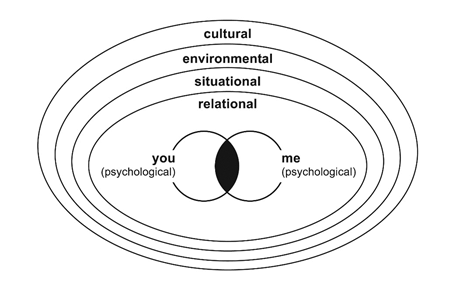
To help you identify your objective, it is important to consider the context in which you are to deliver your speech/presentation. All communication exists within a context, in fact within a number of contexts.
Once you have examined your contexts and decided on your specific objective, you will be able to establish your speech purpose, which will affect the content, style and structure of your speech.
Overall Speech Purpose (WHY?)
An overall speech purpose can help you align your content to assist you in achieving your primary objective. The content of your speech or presentation will have different characteristics based on its overall speech purpose: to inform, to instruct, to persuade or to entertain.
To Inform
This type of speech often takes the form of presentation. It typically involves reporting facts, figures, updates or progress to an audience, e.g. a financial director may be required to report on the financial performance of the company for the last quarter.
To Instruct
This is an informative type of speech and is all about the HOW TO. It is typically interactive, practical and often includes a demonstration (audience involvement can be useful). It is normally related to teaching or training someone how to do something or explaining how something works, e.g. a technical manager may need to demonstrate the functionality of a machine to new employees.
To Persuade
The art of persuasion is centuries old. With a persuasive speech or presentation, you are intending to influence the thinking and/or attitude of the audience to such a degree that the audience will take action as a result of hearing your speech or presentation. A persuasive speech or presentation can be motivational, dynamic and inspiring, or can be serious and sobering e.g. a sales person may want to persuade a potential client to purchase his product or service or a politician may require convening heads of state to take a particular stance on an issue of importance regarding his/her country. These two examples would have differences in tone and mood. However, no matter what the mood, they would both be set to persuade, to bring about a course of action as a result of the speech or presentation. For persuasion to occur, the credibility of the speaker needs to be established first, whether subtly through the speech or as information already known by the audience (e.g. by way of an introduction by a Master of Ceremonies). A persuasive speech always appeals to both the logic and the emotions of the audience. For the logical aspect to be present, evidence is essential to support your argument or point of view.
To Entertain
Some speeches are simply meant to entertain, e.g. wedding speeches. Their primary purpose is to cater for the enjoyment of the audience, be it to celebrate a person, an event or simply to amuse. They are typically light, fun, playful and enjoyable, appealing to the emotions of the audience.
Context (Defining the HOW?)
The context of the communication
Psychological: You, your personality, your experience, your values, beliefs, desires & needs.
Relational: How you relate to one another, define one another and behave in reaction to one another, with whom the status and power lie and whether you like one another or not.
Situational: The social context or situation in which you and the audience find yourselves, including the social conditions and conventions that apply to the particular situation.
Environmental: The physical environment in which the communication takes place: the spatial relationships in the room, the temperature, the noise level, the time of day, etc.
Cultural: The cultural norms, whether they be organisational, ethnic or national or any other learned behaviours that are expected within the culture in which the communication takes place.*
* Adapted from Improve Your Communication Skills by Alan Barker
Structure (HOW?)
Much the same as a story has a beginning, a middle and an ending, a speech will need an opening/introduction, a body/expansion and a closing/conclusion. A basic principle to apply to the overall structure of any speech is the sandwich principle. Think of the opening and closing as the two slices of bread and the body of the speech as the sandwich fillings. To make an interesting sandwich, it is important to ensure the bread is fresh (not stale!) and that you have a variety of, yet not too many, fillings – 3 fillings always works well! It is also the magic number for retention.
Bread: Opening & Introduction
Filling 1: Point 1
Filling 2: Point 2
Filling 3: Point 3
Bread: Conclusion & Closing
Opening & Introduction
It is during your opening that you start to engage and build a rapport with your audience. Your opening needs to be interesting and to attract your audience’s attention, as it creates the first impression of your speech or presentation. It is during this first impression that the audience typically decides whether the speech will be worth listening to or not. Always decide on an engaging opening line and learn the first line or two by heart, so you can start strong. Always make your opening appropriate to the interests, needs and wants of the audience and let it create a natural flow into introducing the content of your speech or presentation. Your introduction is a starting point for your audience’s journey to a new understanding or way of seeing things. Depending on the context and purpose of your speech, sometimes you may also choose to add some butter as an introductory link to the body of your speech or presentation by offering a broad summary of the main points that your speech will cover to give the audience a road map of what to expect.
Body
Ideally, limit the body of the speech to 3 main points that you would like to include in your speech, upon which you can elaborate. If there is a lot of information to cover, group the points you need to make into these 3 main points. If you need to make more than 3 core points, do so, however, remember that your audience will find it difficult to retain too much information so try to prioritise what you need them to hear to achieve your primary objective. Even the content of long speeches can be grouped into a small number of core points.
Conclusion & Closing
Your closing is as important as your opening. It is here that you create your lasting impression. Conclude your speech or presentation by summarising your main points and leave the audience with something to think about.
Always decide on a powerful closing line and learn it by heart. Ask yourself if you have taken your audience on a journey from Point A (Opening & Introduction) to Point B (Conclusion & Closing). If not, rework your closing (and potentially your opening) to ensure that there is movement from the starting point of your speech or presentation to the destination.
Structure as it relates to the Speech Purpose (key factors)
Within the sandwich, the type of structure may vary depending on the speech purpose. Three typical types of structure are: sequential, logical and topical.
Sequential: related by an unfolding pattern such as a time-line
Logical: one thing leads to another (cause and effect)
Topical: various different aspects of the topic, linked by their relationship to the topic
To Inform: often topical or sequential
To Instruct: can be topical, sequential or logical
To Persuade: logical (cause & effect), ideally: problem, cause, solution
To Entertain: often topical or sequential
Style
The style is directly informed by the factors covered in this module. These factors will affect the degree of formality or informality with which you address the audience, the type of language you use and the nature of the structure and content. All of these contribute to the style of your speech, ultimately informing your delivery.
Devices
There are also a number of devices that one can use to make your content interesting. Some of the most commonly used and very effective devices are: anecdotes, stories, metaphor, use of imagery and humour (be careful when using humour!). These can often be integrated into your speech when using examples to illustrate your various statements.
Useful devices include the following:
Comparison:
- Simile: a direct comparison using ‘like’ or ‘as’
- Metaphor: an indirect comparison using a figurative expression
Using imagery to bring an idea to life:
- Personification: the attributing of human characteristics to animals, inanimate objects
- Onomatopoeia: a word that sounds like the sound it describes, e.g. sizzle, crash
- Narration: telling a story that relates to the subject
- Anecdote: a short account of an interesting or amusing incident that reveals something about the subject (usually personal or biographical)
Build up:
- Parallelism: parallel sentence structure, e.g. “Tell me and I forget. Teach me and I may remember. Involve me and I will learn.” (Benjamin Franklin)
- Anaphora: successive clauses or sentences starting with the same word(s), e.g. “It is victory, victory at all costs, victory in spite of all terror, victory, however long and hard the road may be; for without victory, there is no survival.” (Sir Winston Churchill, 1940)
- Repetition: Repeating words or phrases, e.g. “I have a dream” by Martin Luther King, Jr.
Questions:
- Rhetorical Question: A question with no direct answer
- Hypophora: Like a rhetorical question, only this one is immediately answered by the speaker